Antioxidants and cell protection: what selenium, zinc and vitamin C actually do
Antioxidants are substances that neutralize free radicals — and these short-lived, reactive molecules form in large numbers in your body every day. Vitamin C, vitamin E, selenium and zinc are among the classic, EFSA-recognized cell-protection substances. What that means in everyday life, who has higher needs, and where to find these substances in food — coming up. For an overview of all micronutrients, see the pillar Micronutrients.
What free radicals are — and why they aren't inherently bad
Free radicals are molecules with an unpaired electron. They form entirely normally everywhere energy is produced, oxygen is transported, or UV light hits the skin. With load, infections, exercise, or under the influence of smoking, environmental pollutants and some medications, their number rises measurably.
In moderate amounts, free radicals aren't just unavoidable but even useful: the immune system uses them deliberately to neutralize pathogens. Things become problematic only when production permanently overwhelms the body's protective system. This state is called oxidative stress — and that's where antioxidants come in.

Which claims EFSA allows for antioxidants
In the EU, claims about antioxidant action may only appear on a food or supplement when listed in Regulation 432/2012. For seven substances, protection from oxidative stress is recognized there scientifically:
- Vitamin C — contributes to the protection of cells from oxidative stress
- Vitamin E — contributes to the protection of cells from oxidative stress
- Selenium — contributes to the protection of cells from oxidative stress
- Zinc — contributes to the protection of cells from oxidative stress
- Manganese — contributes to the protection of cells from oxidative stress
- Riboflavin (B2) — contributes to the protection of cells from oxidative stress
- Copper — contributes to the protection of cells from oxidative stress
Other substances — such as coenzyme Q10, alpha-lipoic acid,
secondary plant compounds like lycopene, resveratrol or curcumin — are eagerly marketed as antioxidants in advertising. EFSA hasn't approved a corresponding health claim for these substances, though. As long as no EFSA claim is authorized, marketing texts and labels must not assert any effect for these substances — evidence from controlled studies was not sufficient under the EFSA process.
Daily intake per DGE
Daily values — DGE reference values again:
| Substance | Recommendation adults |
|---|---|
| Vitamin C | 95 mg (women) / 110 mg (men); smokers: 135 / 155 mg |
| Vitamin E | 12 mg (women) / 14 mg (men) (estimated value) |
| Selenium | 60 µg (women) / 70 µg (men) (estimated value) |
| Zinc | 7–10 mg (women) / 11–16 mg (men), depending on phytate content of diet |
| Manganese | 2–5 mg (estimated value) |
For zinc, requirement depends on phytate intake: whole grains, legumes and nuts contain phytates, which lower zinc uptake. Anyone on a plant-heavy diet sits closer to the upper end of the range. For vitamin C, the jump to smoker values is large — tobacco smoke generates many free radicals; the elevated need is well documented.
Where to find antioxidants in food
A diet with five portions of fruit and vegetables per day (DGE: ca. 750–1000 g) covers plant-based antioxidants well. Concrete sources:
| Substance | Rich foods |
|---|---|
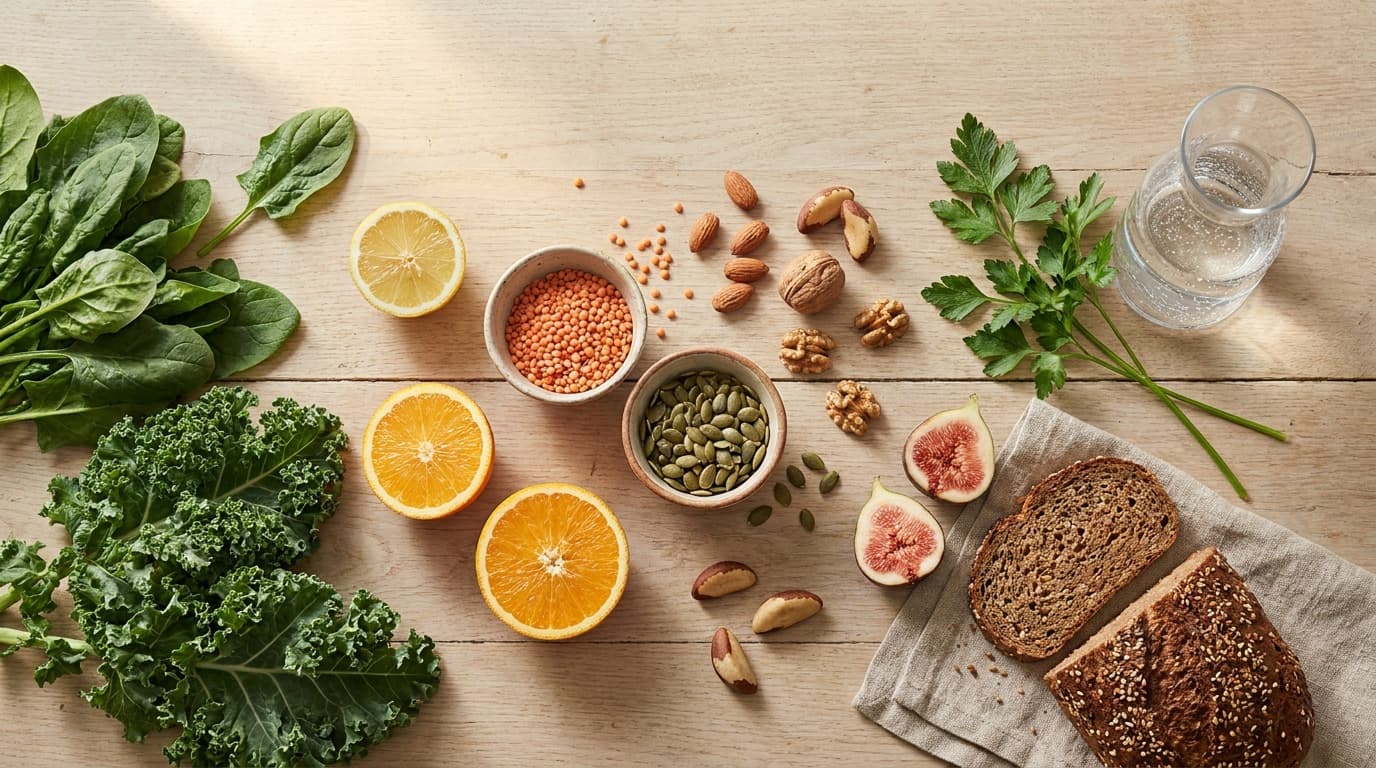
| Vitamin C | Rose hips, sea buckthorn, acerola, currants, peppers, broccoli, kale, kiwi, citrus fruit, potatoes (cooked) |
| Vitamin E | Vegetable oils (sunflower, olive, rapeseed), almonds, hazelnuts, sunflower seeds, wheat germ, avocado |
| Selenium | Brazil nuts (caution: no more than 2 per day due to radiation load), sea fish, meat, eggs, whole grains, sesame |
| Zinc | Beef, pumpkin seeds, sunflower seeds, hard cheese, oats, lentils, cashews |
| Carotenoids | Carrots, sweet potatoes, pumpkin, apricots, spinach, kale, tomatoes, mango |
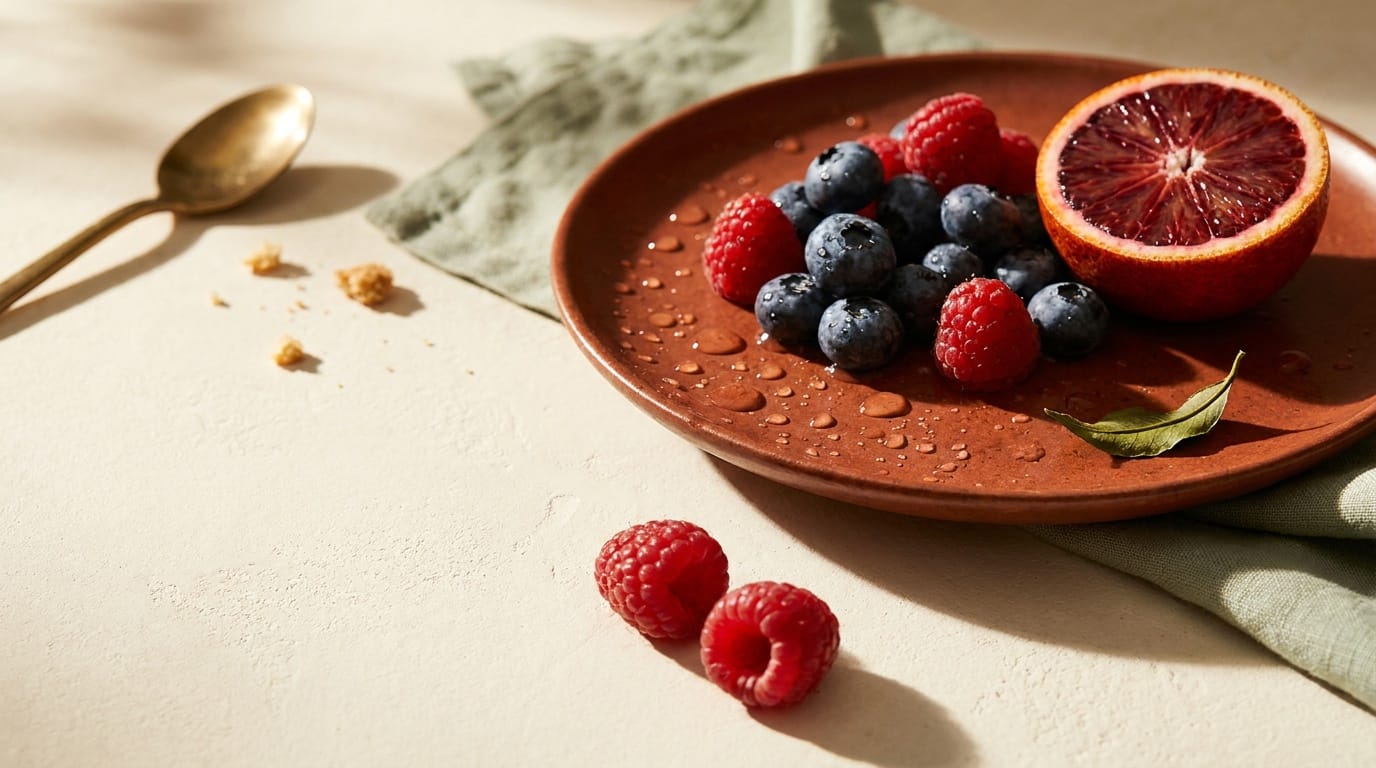
| Polyphenols, flavonoids | Berries, grapes, green tea, olive oil, dark chocolate |
Vitamin C is heat- and light-sensitive — gentle cooking or raw consumption preserves more. Vitamin E is fat-soluble, so low-fat salads need a bit of oil for the vitamin to be absorbed at all. Carotenoids from carrots become noticeably more bioavailable with some fat — that's why grated carrots are classically dressed with oil.
When the requirement is elevated
There are clearly delineable phases when more antioxidant protection makes sense:
- Exercise and intense training: more metabolic activity means more free radicals. Especially with training novices and in phases of high load, rich intake pays off.
- Smoking: significantly elevated vitamin C requirement (see DGE values).
- Recovery after infections: in fighting pathogens, the immune system produces many free radicals; well-supplied cell protection supports recovery.
- Sun exposure and UV load: for the skin, vitamin E, vitamin C and carotenoids are relevant protective factors — which of course doesn't replace external sun protection.
- Plant diet with high phytate content: zinc requirement at the upper edge, selenium supply in Germany can generally be tight because the soils are selenium-poor.
When supplementation makes sense — and when not
The DGE recommends covering antioxidants primarily through diet. High-dose antioxidant mixed preparations "for stockpiling" are not recommended — for some substances, oversupply is even problematic:
- Selenium: EFSA sets the UL at 255 µg per day (adults); above this threshold, selenosis symptoms can occur (brittle nails, hair loss). One Brazil nut can already contain 70 µg — caution when combining with selenium supplements.
- Zinc: above 25 mg/day from supplements can disrupt copper uptake; the BfR recommends supplement upper limits clearly below that.
- Beta-carotene: in high doses for smokers, since the ATBC study (1994) linked to elevated lung cancer risk. Through food this isn't an issue, but high-dose preparations should be avoided.
Targeted supplementation makes sense in some cases: Vitamin C in acute load or cold phases moderately (200–500 mg per day); Selenium with vegetarian or vegan diet as a 30–50 µg addition; Zinc with plant diet at the upper end of the requirement range. High doses or "mega antioxidant" complexes blanket — better not.
Antioxidants work as a team
The most important observation at the end: antioxidants don't act in isolation. Vitamin E is active in the metabolism of cell membranes; vitamin C regenerates oxidized vitamin E back to its active form; selenium is part of the body's glutathione peroxidase, which keeps that cycle running. The EFSA-authorized contribution of all four substances is "contributes to the protection of cells from oxidative stress" — as cell protection, they work together. A single substance in high dose doesn't replace the team — the diversity of a plant-rich diet does.
If you want to know whether there are concrete gaps in vitamin C, selenium, zinc or other micronutrients in your everyday life, the free Vital-Check helps with a written assessment in a few minutes — no phone call, no sales pressure. Anyone looking in parallel at the topic of fatigue will find depth in Iron and tiredness and B vitamins overview, both linked to energy metabolism.
Frequently Asked Questions
What are antioxidants?
Antioxidants are substances that neutralize free radicals — short-lived, reactive molecules that arise in metabolism and through external influences. In the EU, vitamin C, vitamin E, selenium, zinc, manganese, riboflavin and copper are explicitly allowed to carry the claim of contributing to the protection of cells from oxidative stress (EFSA, Regulation 432/2012).
Who has higher needs?
According to the DGE, smokers need clearly more vitamin C (135 mg women, 155 mg men per day, instead of 95/110 mg). Endurance athletes, people in phases of high physical load, and people in recovery benefit from rich intake of fruit, vegetables and antioxidant trace elements.
Is an antioxidant supplement worthwhile?
As a blanket rule, no. A diet with five portions of fruit and vegetables per day (DGE recommendation, ca. 750–1000 g) covers vitamin C, E and carotenoids well. Selenium and zinc can be tighter depending on diet and soil quality — targeted supplementation can make sense, high-dose multi products do not.
Can you overdose on antioxidants?
Yes. Selenium is toxic in higher doses (selenosis: brittle nails, hair loss — EFSA UL 255 µg/day); zinc above 25 mg/day from supplements can disrupt copper uptake; high-dose beta-carotene has been considered problematic in smokers since the ATBC study (1994). For daily amounts from supplements, refer to the current BfR document.
Are secondary plant compounds antioxidants?
Yes, many act as antioxidants — polyphenols, flavonoids, carotenoids, lycopene. EFSA has not authorized health claims for most of these compounds, though, because evidence from clinical trials for isolated single substances is usually insufficient. When in doubt: the whole food rather than the isolated extract.
Sources
Related articles
Micronutrients — what your body actually needs
Vitamins, minerals, trace elements: what micronutrients are, which ones really matter day to day, and when supplementation actually makes sense.

Bioavailability explained: how much of a nutrient your body actually absorbs
Bioavailability isn't only about quantity. What form, meal context, and individual factors do — and what to look for when buying supplements.
Omega-3 for heart function: EPA, DHA and ALA explained
EPA and DHA contribute to normal heart function from 250 mg per day (EFSA). Difference EPA/DHA/ALA, best sources, what to check when buying.
Personal evaluation instead of general tips
Take the free Vital-Check — you'll receive your evaluation via WhatsApp or email. Which micronutrients are really useful for your daily life and your goals, without a long phone call.
Start Vital-Check